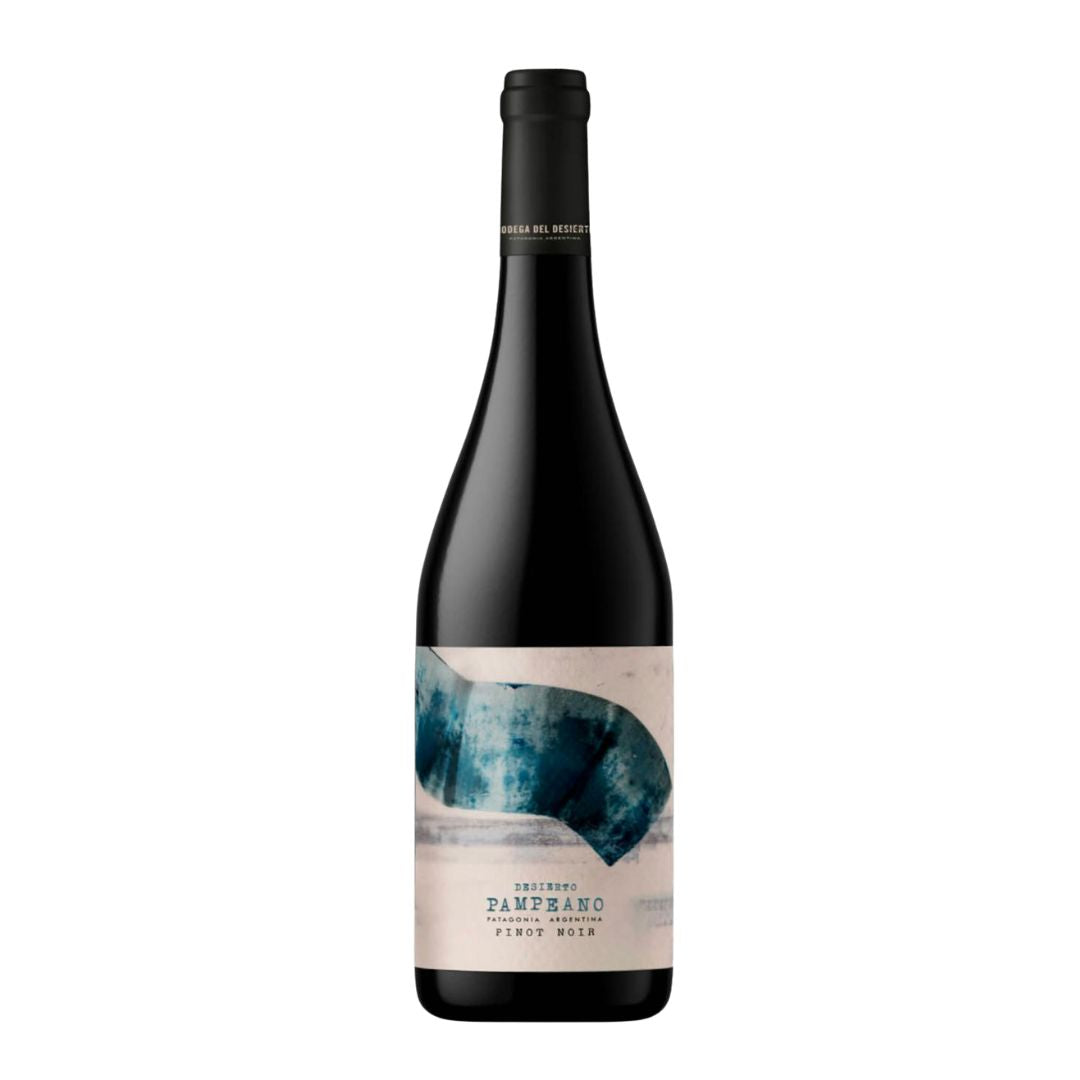
Pinot Nero Pampeano | Bodega del Desierto

Sale price€21,00

Red
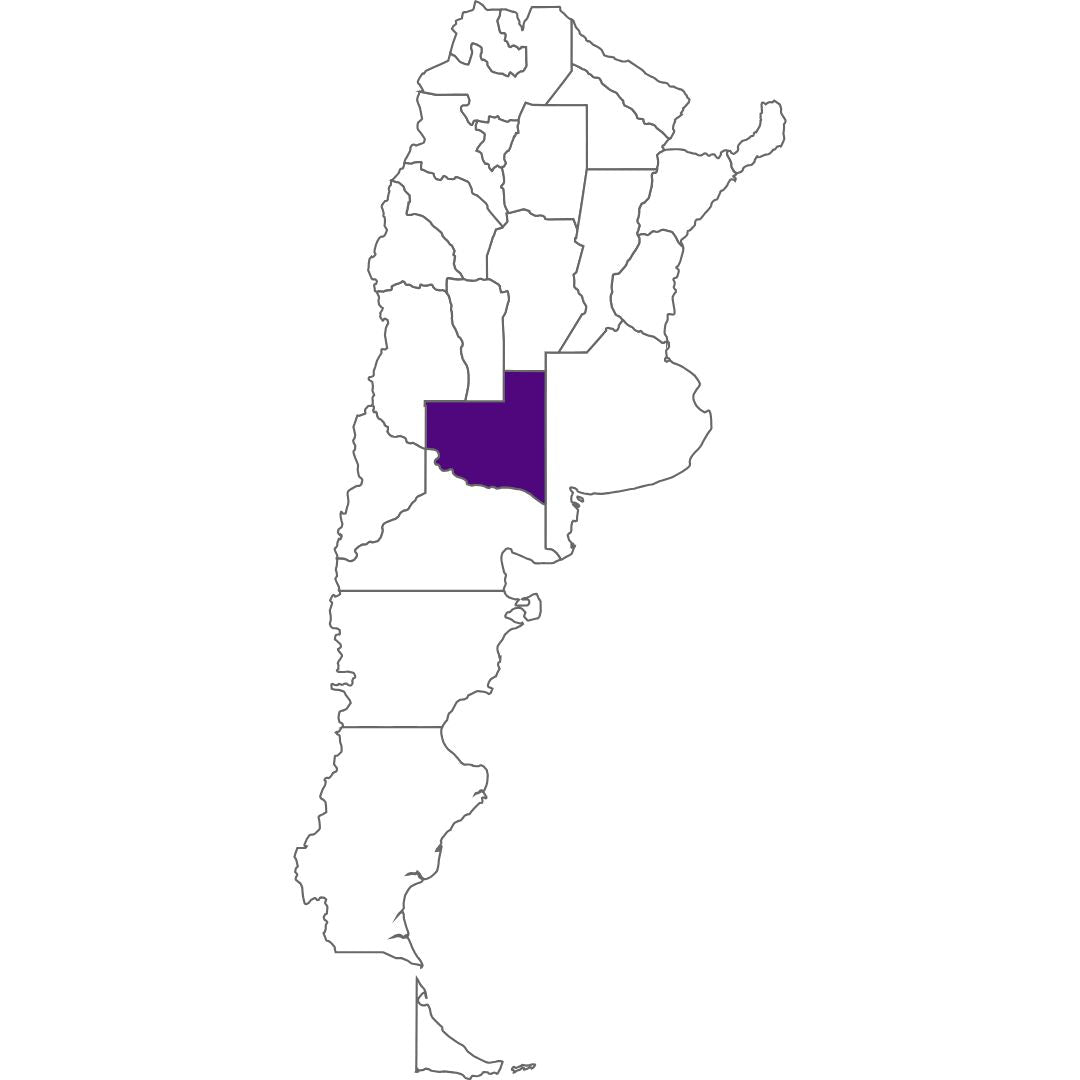
La Pampa (AR)
Pinot noir 100%
Enjoy it within 4 years
13,6% ABV

Download as PDF

Production and refinement

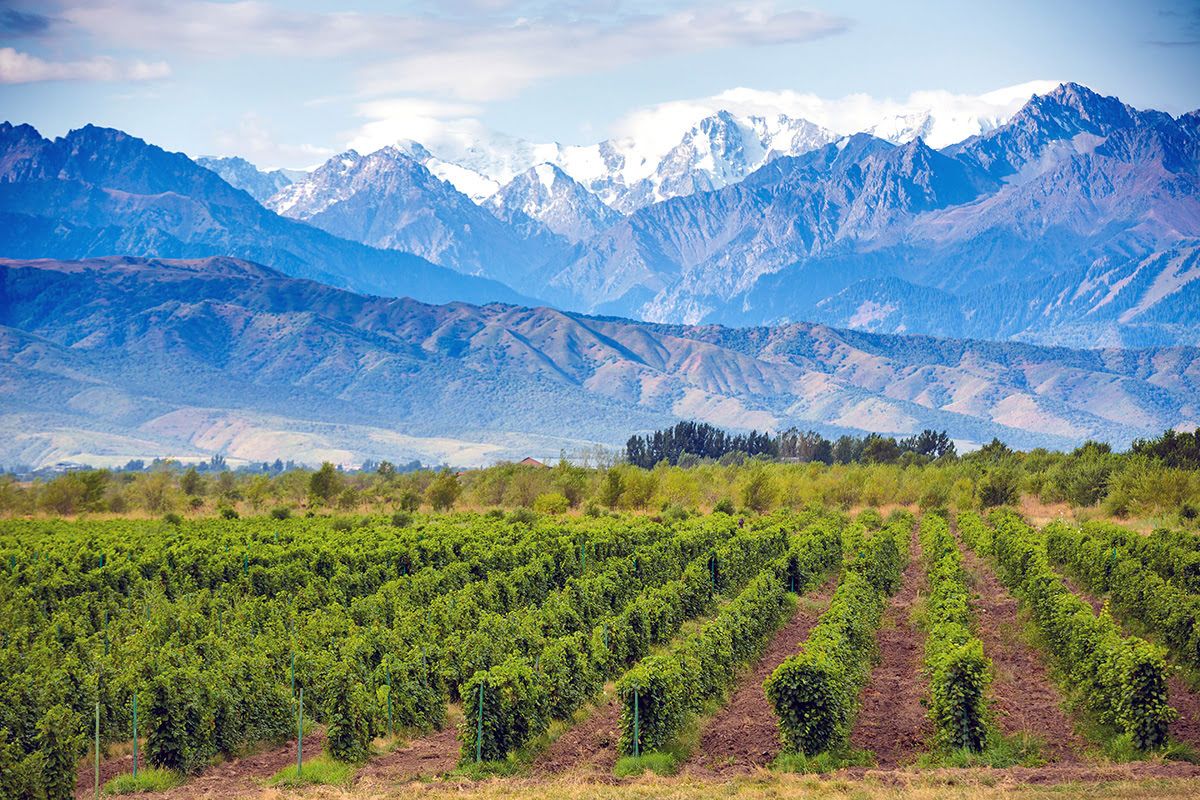
The “Pampeano” Pinot Noir is born in the extreme and windy region of La Pampa in Argentina, within the Upper Río Colorado Valley, in a desert environment where viticulture was introduced in the early 2000s through a replanting project of European varieties in areas once completely arid.

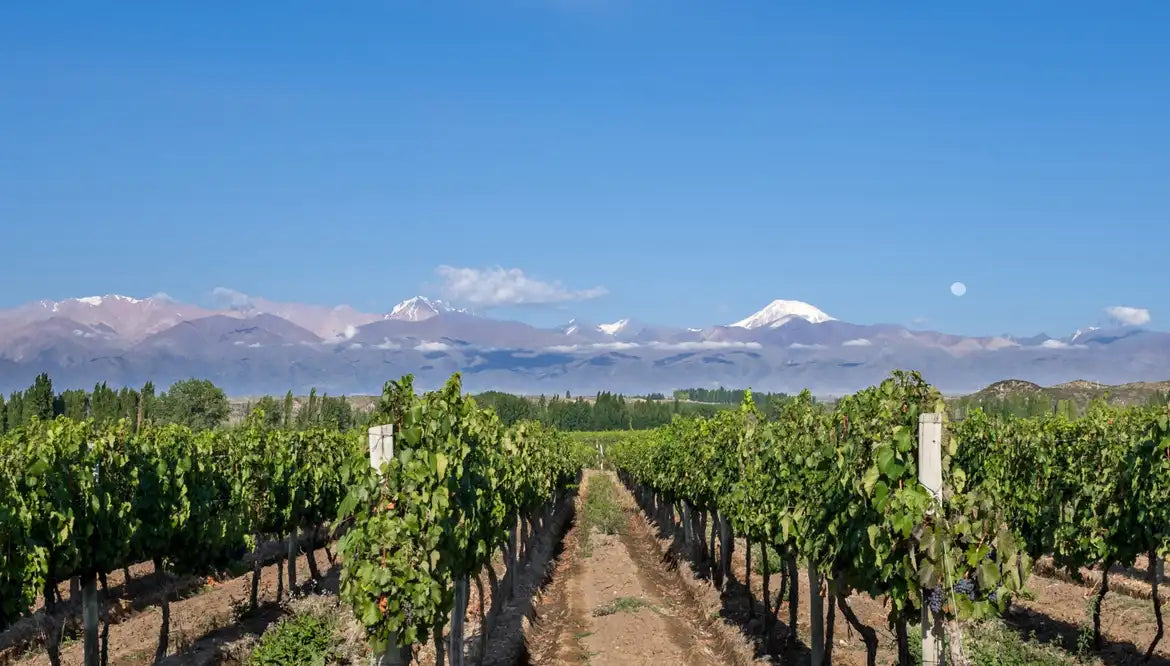
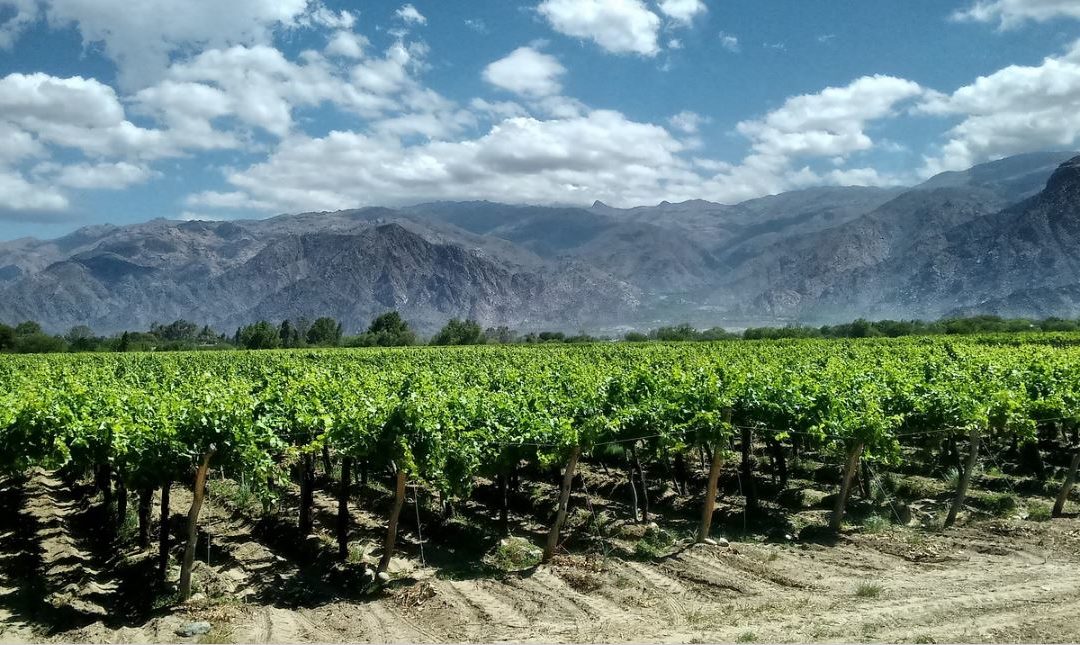
The vineyards are located in a territory characterized by strong diurnal temperature variation, low rainfall, and poor soils that force the vine to develop deep root systems, contributing to wines of great aromatic precision and tension.

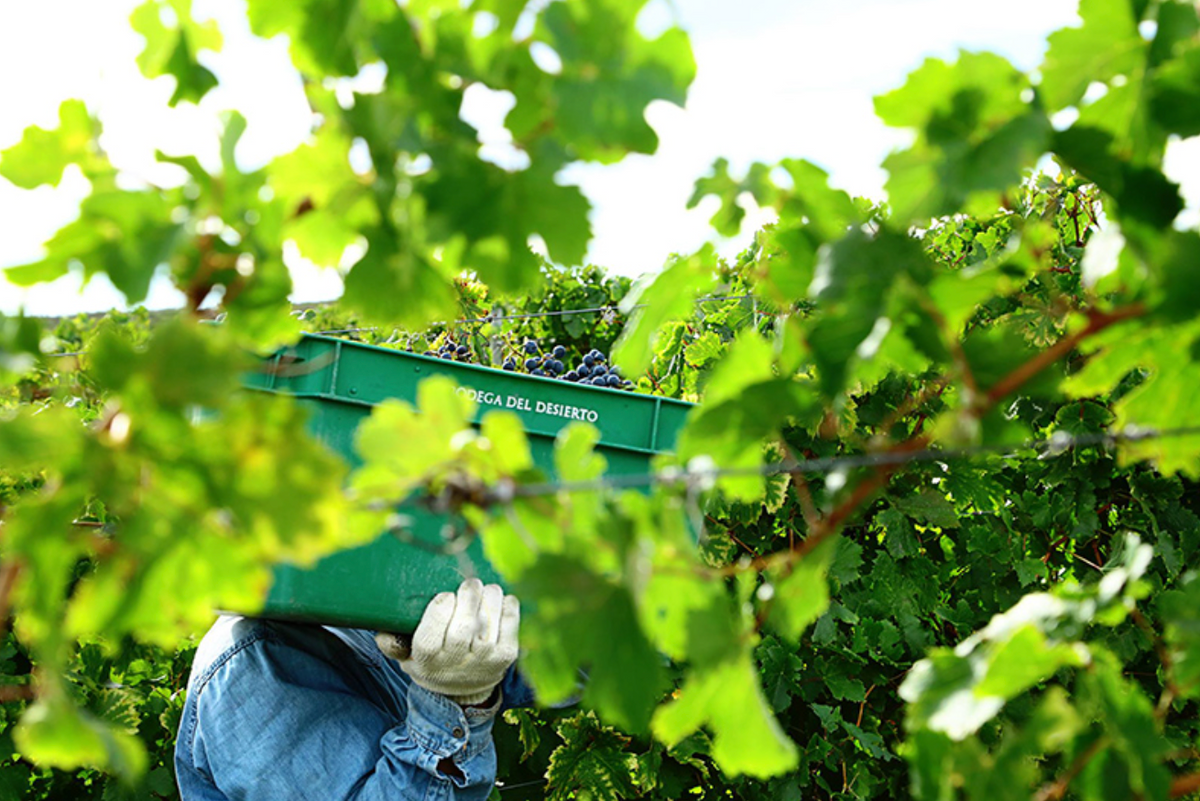
Harvesting takes place at night to preserve freshness and aromatic integrity, and the grapes are delivered to the winery in the early morning hours. Vineyard management is focused on enhancing the extreme Patagonian climate, a defining element of the wine’s identity.

After harvest, the Pinot Noir grapes undergo a cold pre-fermentative maceration of about 72 hours in stainless steel, in order to extract primary aromas and fine tannins. Alcoholic fermentation takes place at a controlled temperature between 24 and 26°C using selected yeasts, while malolactic fermentation occurs at around 20°C with native lactic bacteria.

Aging continues exclusively in stainless steel, to preserve the varietal profile and fruit purity without any oak influence.

Organoleptic analysis

Visual exam

Deep ruby red with bright violet reflections, clear and luminous in the glass.

Olfactory examination

The aromatic profile is characterized by notes of ripe cherry, raspberry, and fresh small red berries. It also reveals nuances of white flowers, delicate herbs, and, with aeration, light hints of damp earth and dry undergrowth.

Tasting

Elegant and smooth on the palate, with a medium body and fine tannins. The attack is fresh and fruity, followed by a balanced, linear, and tense mid-palate. The finish is persistent, with echoes of red fruit and a subtle herbal and mineral imprint typical of the desert terroir.

Contents index

From the vineyard to the table: discover our wine

Ready for a journey to discover Pinot Nero Pampeano | Bodega del Desierto ? We will now take you to delve deeper into every aspect of this exceptional wine through three key sections:

Cellar

Come and learn about the history and values ​​of the winery which passionately grows and transforms grapes into wine

Territory

Immerse yourself in the land that gives life to these unique grapes, discovering the climate and terroir that influence its character

Pairings

Get expert advice on the perfect pairings that will enhance both the wine and your meal

The winery
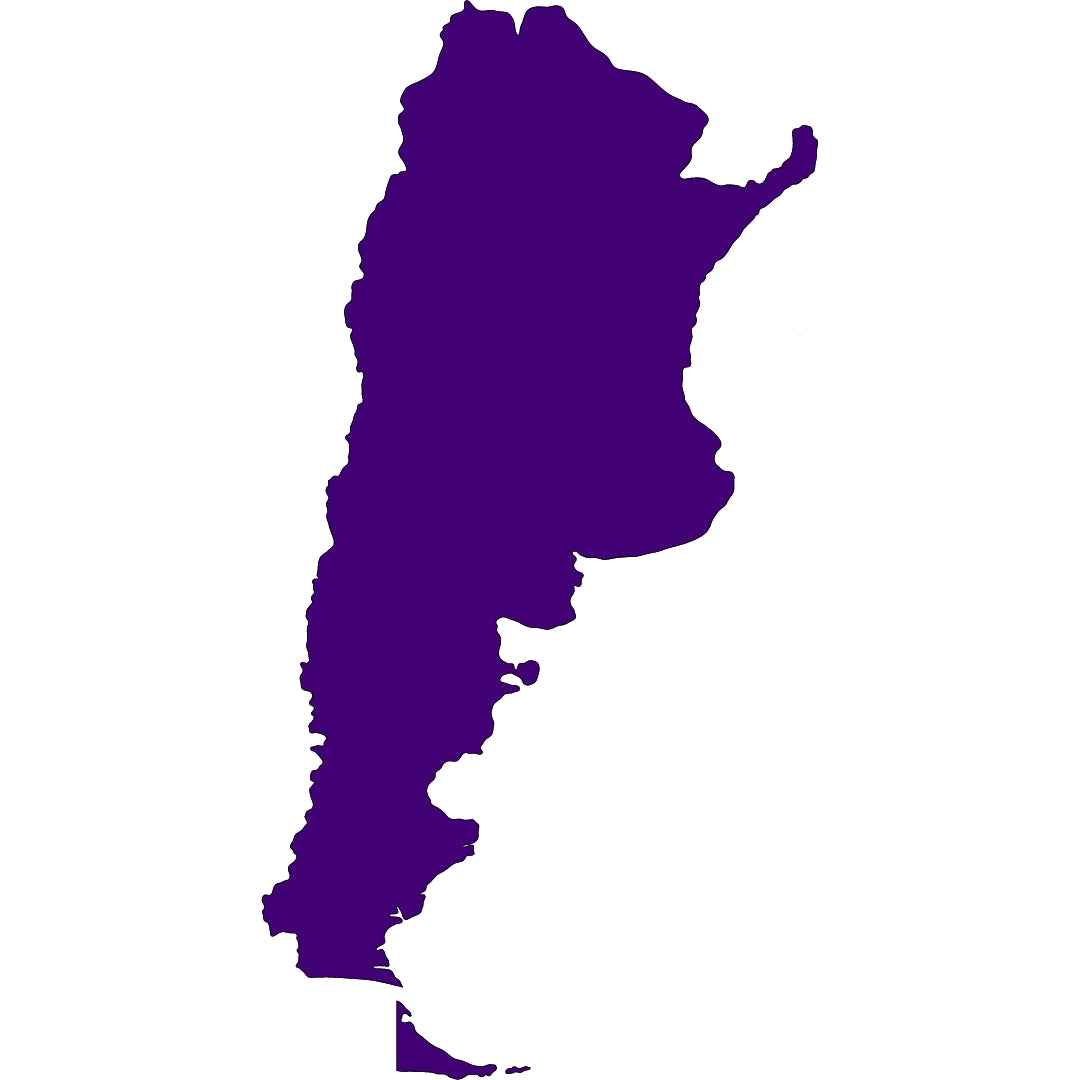
Country: Argentina

Region: La Pampa

Hectares of vineyards: 140

Bodega Del Desierto

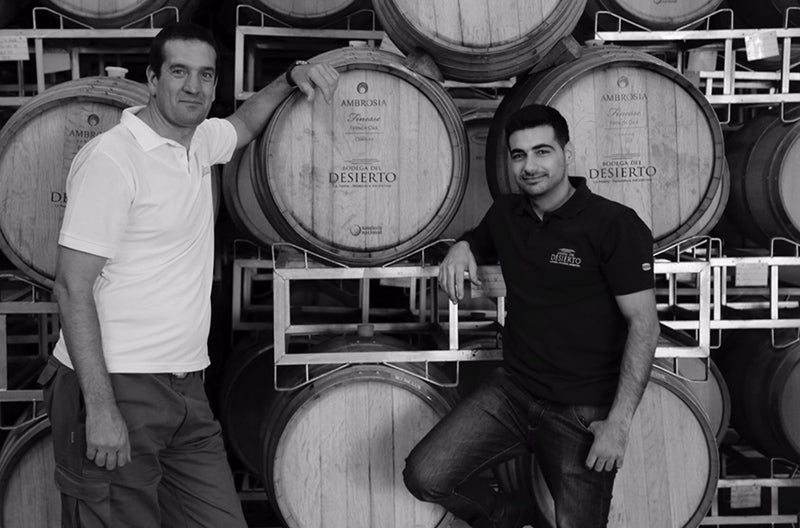
Bodega Del Desierto was founded in 2001 with an ambitious and visionary project: to transform a desert area of northern Patagonia, in the Upper Río Colorado Valley, into a productive viticultural region.

This area lies in a transitional zone between La Pampa and true Patagonia: a geographic margin where the Pampas plains gradually give way to the more arid and continental environments of the south. In viticultural terms, this band is often included within so-called “northern Patagonia,” due to the climatic and soil continuity between the two regions.

The name of the winery itself reflects its original challenge: cultivating vines in the desert. In an environment characterized by extreme climatic conditions, strong solar exposure, constant winds, and poor soils, the estate introduced European varieties such as Pinot Noir, Chardonnay, and other international cultivars, demonstrating the vine’s high adaptability even in environments far from its traditional origins.

Bodega Del Desierto

The production philosophy of Bodega Del Desierto is based on a balance between modern technology and respect for the terroir, with the aim of expressing maximum varietal purity and the extreme identity of the Patagonian landscape.

The result is an elegant, fresh, and precise style, strongly shaped by the climatic conditions of the desert.

Region and territory

An emerging wine region
Argentina

An emerging wine region

Argentina

An emerging wine region

Argentina

Argentina is the world’s fifth-largest wine producer and has very high domestic consumption, at around 40 liters per capita per year, while exports remain limited compared to its production potential. The country benefits from ideal pedoclimatic conditions for viticulture, with strong diurnal temperature variation, high sunshine levels, and Andean foothill regions that produce wines of great concentration and balance, often comparable in latitude to the best areas of Chile.

Viticulture arrived with Spanish colonizers in the 16th century and initially developed with “Mission” grape varieties, from which Criolla Chica, Criolla Grande, and Cereza are derived—still present today but increasingly less central. The main production hub later emerged in Mendoza, thanks to the Andes’ water supply. A distinctive feature is the historical absence of phylloxera in some areas, which has preserved ungrafted vines.

From the late 19th century, European immigration introduced new expertise and grape varieties such as Malbec (now the national flagship), Bonarda, Cabernet Sauvignon, Merlot, Chardonnay, and Torrontés, as well as Italian varieties like Barbera and Sangiovese. Torrontés stands out as the country’s principal aromatic white, while Malbec dominates among red wines.

The regulatory system is less restrictive than in Europe: the Instituto Nacional de Vitivinicultura oversees production and exports, but quality is largely in the hands of producers. Labeling requires that the stated grape variety represent at least 80% of the wine.

Today, around 60% of production consists of red wines, with a steady rise in quality and territorial identity, alongside a production sector still partially oriented toward volume.

La Pampa

La Pampa is a transitional geographic and cultural area between Argentina’s main wine regions, though it is often considered—by landscape and identity—a natural continuation of Patagonia. It is an intermediate zone without clear boundaries, where the vast central plains gradually begin to shift into more arid and continental environments. For this reason, in oenological terms, parts of its western area are frequently included within “wine Patagonia,” due to climatic and territorial continuity.

From a morphological point of view, the territory is dominated by rolling plains and broad depressions oriented west to east, forming fan-shaped valleys with significant variations in slope. This structure generates marked microclimatic diversity, a key factor for viticulture.

Since 2000, the Patagonian wine frontier has expanded northward along the Río Colorado basin, particularly in the 25 de Mayo area of the Upper Río Colorado Valley, where a new generation of viticulture has developed. Here the climate is moderately continental, with mild springs and autumns, warm summers, and cold winters—conditions that favor slow, even ripening while preserving freshness and natural acidity.

Within this context of expansion, La Pampa acts as a zone of experimentation and continuity with Patagonia, sharing part of its climatic and production logic.

The ampelographic profile is dominated by international varieties such as Malbec, Cabernet Sauvignon, Merlot, and Cabernet Franc, along with Chardonnay among the white grapes. The result is a viticulture that expresses balance between freshness, structure, and territorial identity, in a still-evolving region increasingly recognized for its qualitative potential.

A landscape dominated by rolling plains.

Recommended pairings and dishes

Matching by concordance

The aromatic finesse and delicate tannic structure of this Argentine Pinot Noir harmonize with equally elegant dishes, where delicate textures, gentle cooking methods, and natural flavors prevail.

Matching by contrast

The freshness and vibrancy of this Pinot Noir contrast beautifully with rich or slightly savory dishes, creating a gustatory balance and a palate-cleansing effect that invites another sip.

It pairs well with

Roasted white meats, lightly spiced duck, seared tuna, grilled salmon, mushroom risotto, pasta with grilled vegetables, herb-roasted chicken, vitello tonnato, delicate meat empanadas, and medium-aged cheeses. It is also excellent with lightly spiced fusion cuisine or mushroom-based dishes.

Matching by concordance

The aromatic finesse and delicate tannic structure of this Argentine Pinot Noir harmonize with equally elegant dishes, where delicate textures, gentle cooking methods, and natural flavors prevail.

Matching by contrast

The freshness and vibrancy of this Pinot Noir contrast beautifully with rich or slightly savory dishes, creating a gustatory balance and a palate-cleansing effect that invites another sip.

It pairs well with

Roasted white meats, lightly spiced duck, seared tuna, grilled salmon, mushroom risotto, pasta with grilled vegetables, herb-roasted chicken, vitello tonnato, delicate meat empanadas, and medium-aged cheeses. It is also excellent with lightly spiced fusion cuisine or mushroom-based dishes.

Fried Mushrooms

Fried mushrooms are a dish as simple as it is appetizing, perfect to serve in autumn as a tasty appetizer or substantial side dish: fragrant, flavorful, and very pleasant.

Empanadas

One of the emblematic dishes of Argentine tradition: small semicircular stuffed pastries, made from a dough based on wheat flour and fat or oil. The filling varies, but the most typical versions include hand-cut or minced beef, onion, hard-boiled eggs, olives, and spices such as paprika and cumin.

They can be baked or fried. The result is a rich yet balanced bite, where the succulence of the filling blends with the friability of the dough, creating a contrast between a soft interior and a lightly crisp exterior.

Pinot Nero Pampeano | Bodega del Desierto , did you like it?

Tell us about it by clicking here

Review

Pinot Nero Pampeano | Bodega del Desierto , did you like it?

Tell us about it by clicking here

Review