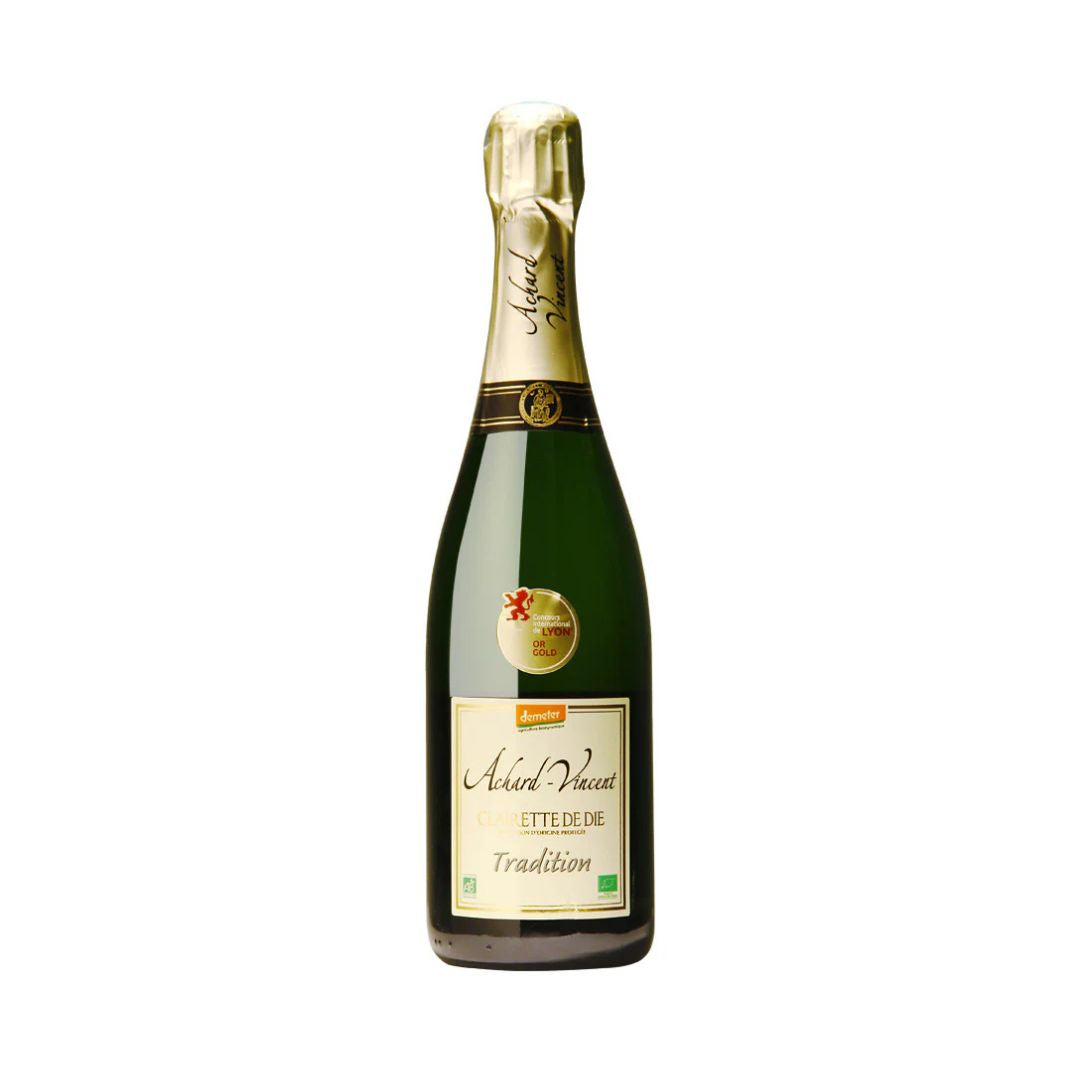
Clairette de Die Tradition | Domaine Achard

Sale price€25,00

Sparkling Wine
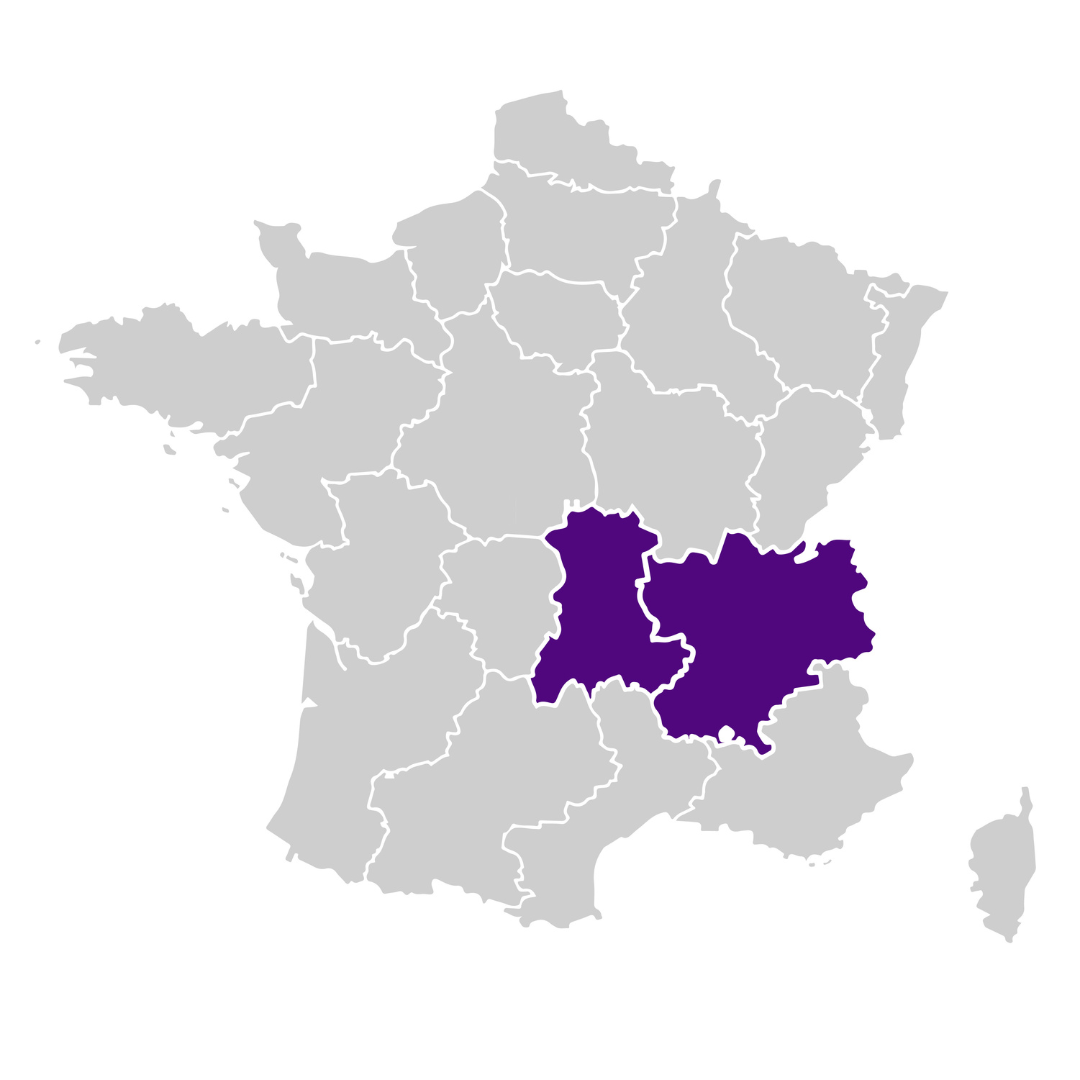
Rhône Valley (FR)
Clairette de Die AOP
Muscat à petits grains (85%), Clairette blanche (15%)
Enjoy it within 4 years
7,5% ABV

Download as PDF

Production and refinement

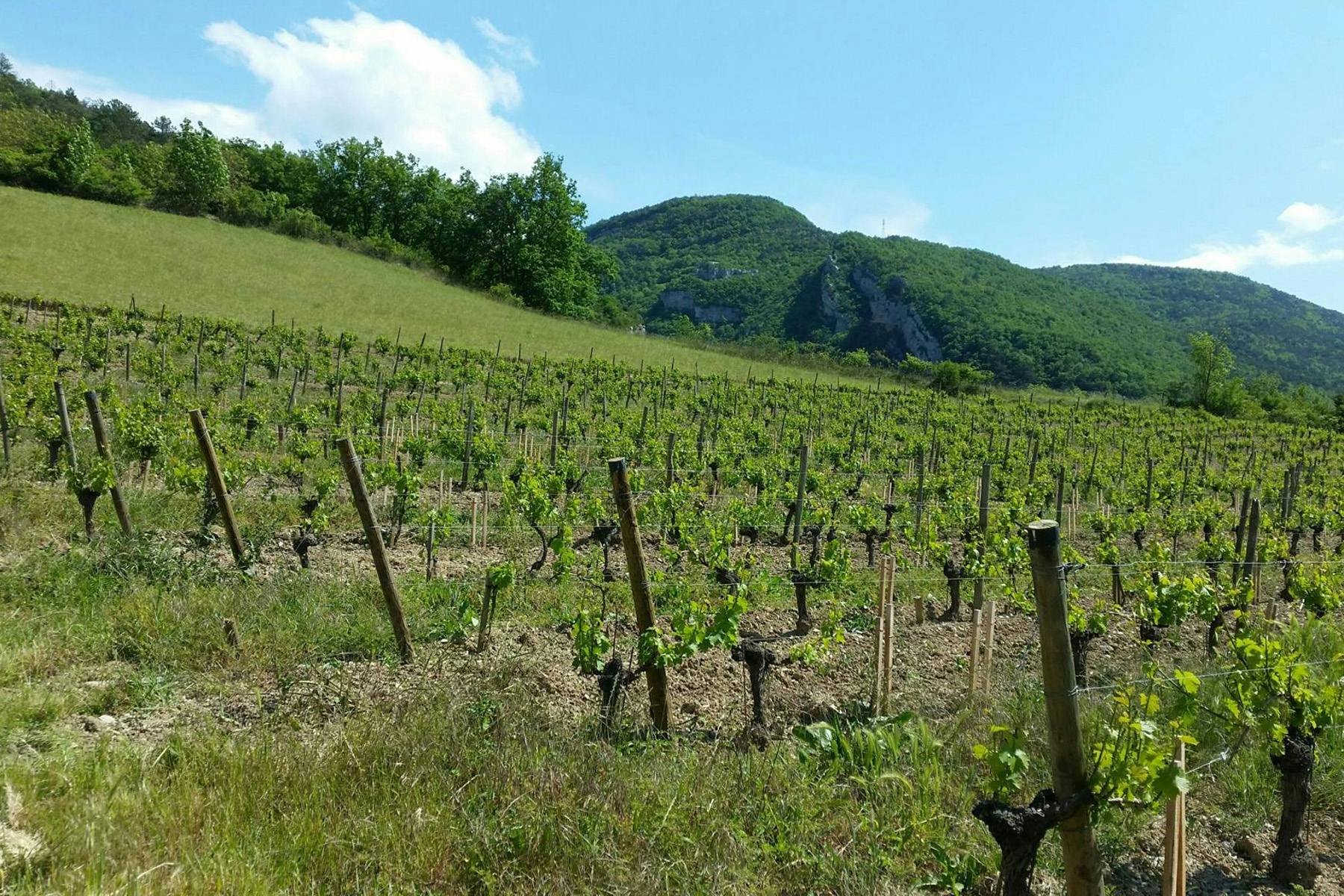
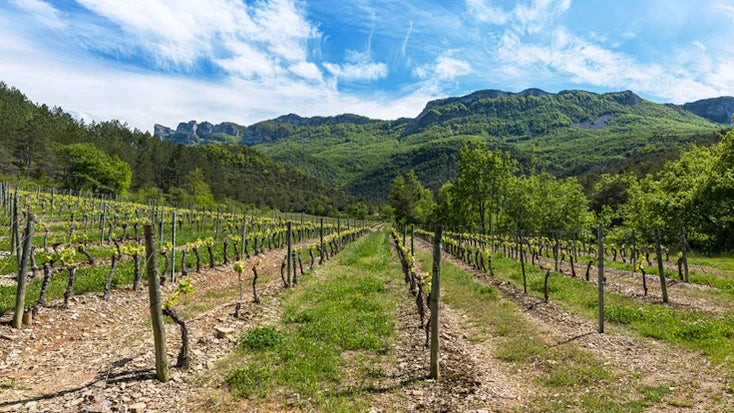
The grapes come from an alpine region characterized by a cool, breezy climate with strong temperature variations, ideal for preserving acidity and aromas. The vineyards root in soils rich in limestone and clay, elements that contribute to the wine’s aromatic tension, freshness, and delicate minerality. The grapes are hand-harvested to preserve their integrity, with particular attention to the ripening of the Muscat, which is responsible for the cuvée’s remarkable aromatic expression.

The wine is produced using the ancestral method. Fermentation begins in the tank and finishes in the bottle, without disgorgement, thus preserving a natural cloudiness and retaining the CO₂ originally produced by the yeasts. No tirage liqueur or sugar is added: the sweetness comes solely from the natural residual sugars of the grapes. The wine matures directly in the bottle, developing a fine and elegant mousse.

Organoleptic analysis

Visual exam

Visually, it shows a bright yellow with luminous reflections. The foam is fine and creamy, while the perlage is delicate and persistent.

Olfactory examination

The nose is intense, fragrant, and aromatic: notes of exotic fruit, citrus such as grapefruit, floral hints, and a sweet aromatic undertone typical of the grape variety emerge. The overall impression is fresh, immediate, and inviting.

Tasting

On the palate, it is soft and sweet, never heavy: its lively freshness and low alcohol content make it harmonious and very pleasant. Notes of fruit reappear, accompanied by a subtle citrus touch that balances the sweetness. The finish is clean, fragrant, and delicately aromatic.

Contents index

From the vineyard to the table: discover our wine

Ready for a journey to discover Clairette de Die Tradition | Domaine Achard ? We will now take you to delve deeper into every aspect of this exceptional wine through three key sections:

Cellar

Come and learn about the history and values ​​of the winery which passionately grows and transforms grapes into wine

Territory

Immerse yourself in the land that gives life to these unique grapes, discovering the climate and terroir that influence its character

Pairings

Get expert advice on the perfect pairings that will enhance both the wine and your meal

The winery
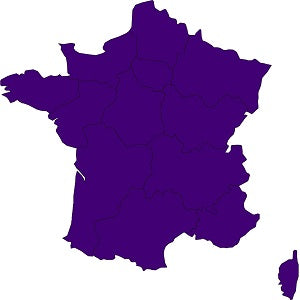
Country: France

Region: Northern Rhône Valley, Sainte-Croix

Hectares of vineyards: 11

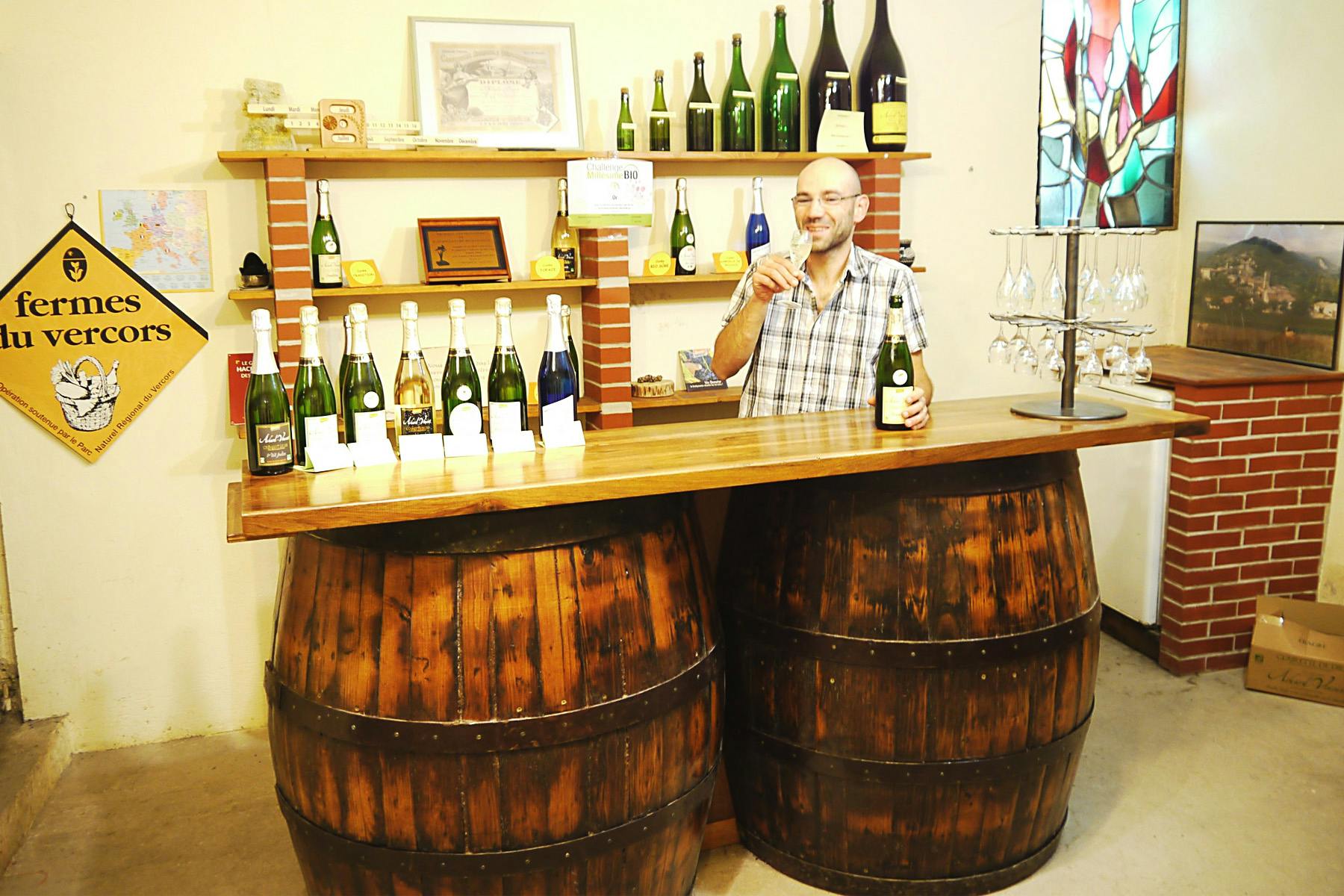
Domaine Vincent Achard

The Domaine Vincent Achard stands out for its attention to balance in the vineyard, with a history rooted in organic practices first, and then transitioning to biodynamic methods starting from 1968 (Demeter biodynamic certification since 2005), confirming itself as a true pioneer in sustainability.

Located between the Prealps of Vercors and the picturesque region of Provence, it is run as a family business. Its production focuses on Clairette wines using the ancestral method typical of Diois, with a history that has ancient roots.

Domaine Vincent Achard

The estate cultivates a total of 11 hectares of vineyards in the Drôme, which is part of the Northern Rhône Valley, an area renowned for the production of high-quality wines.

Achard's wines are made following the ancestral method typical of Diois, giving each bottle a unique and distinctive character.

Region and territory

The Rediscovery of Syrah Along the Riverbanks
Rhône Valley

The Rediscovery of Syrah Along the Riverbanks
Rhône Valley

The Rediscovery of Syrah Along the Riverbanks
Rhône Valley

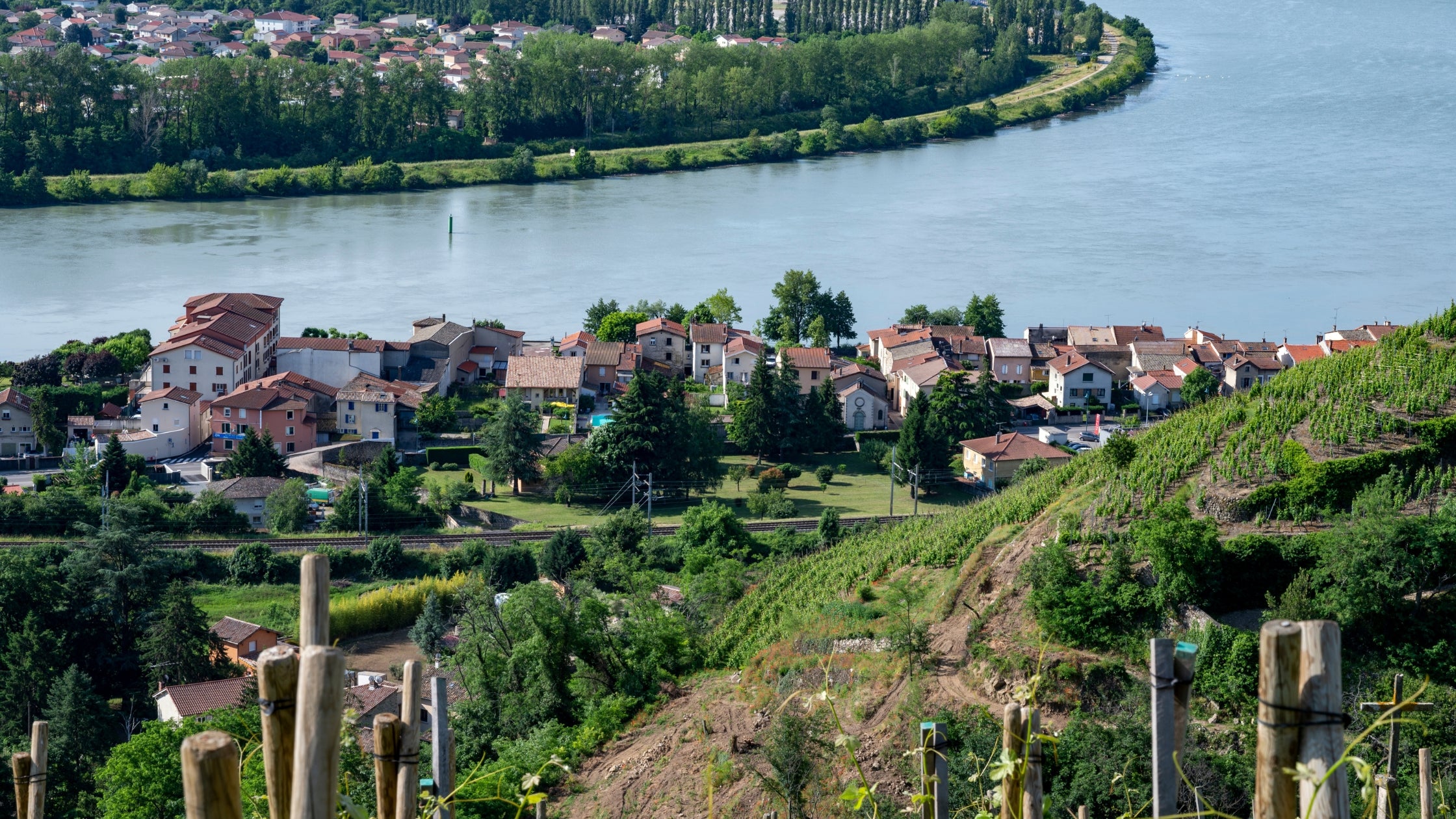
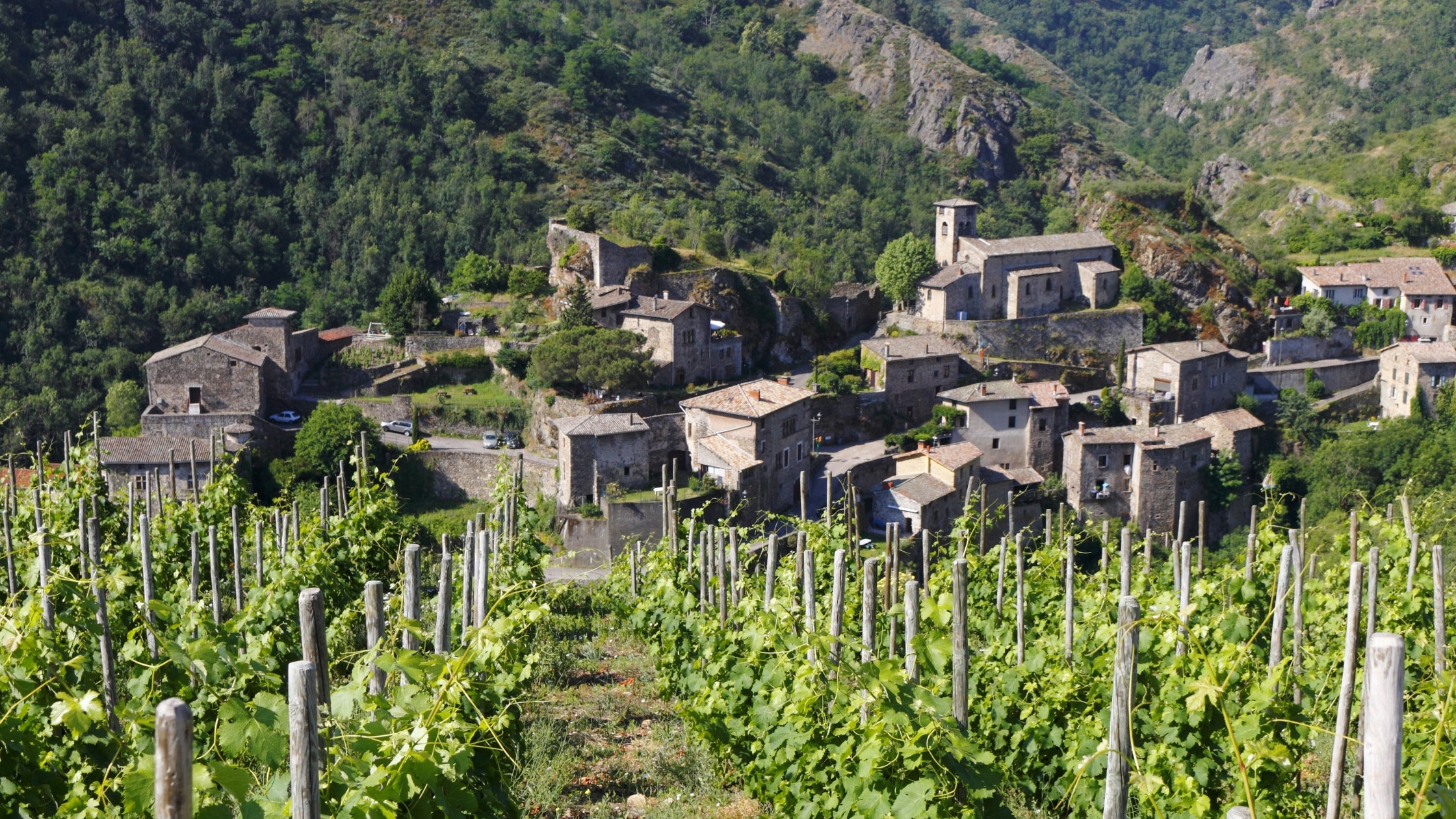
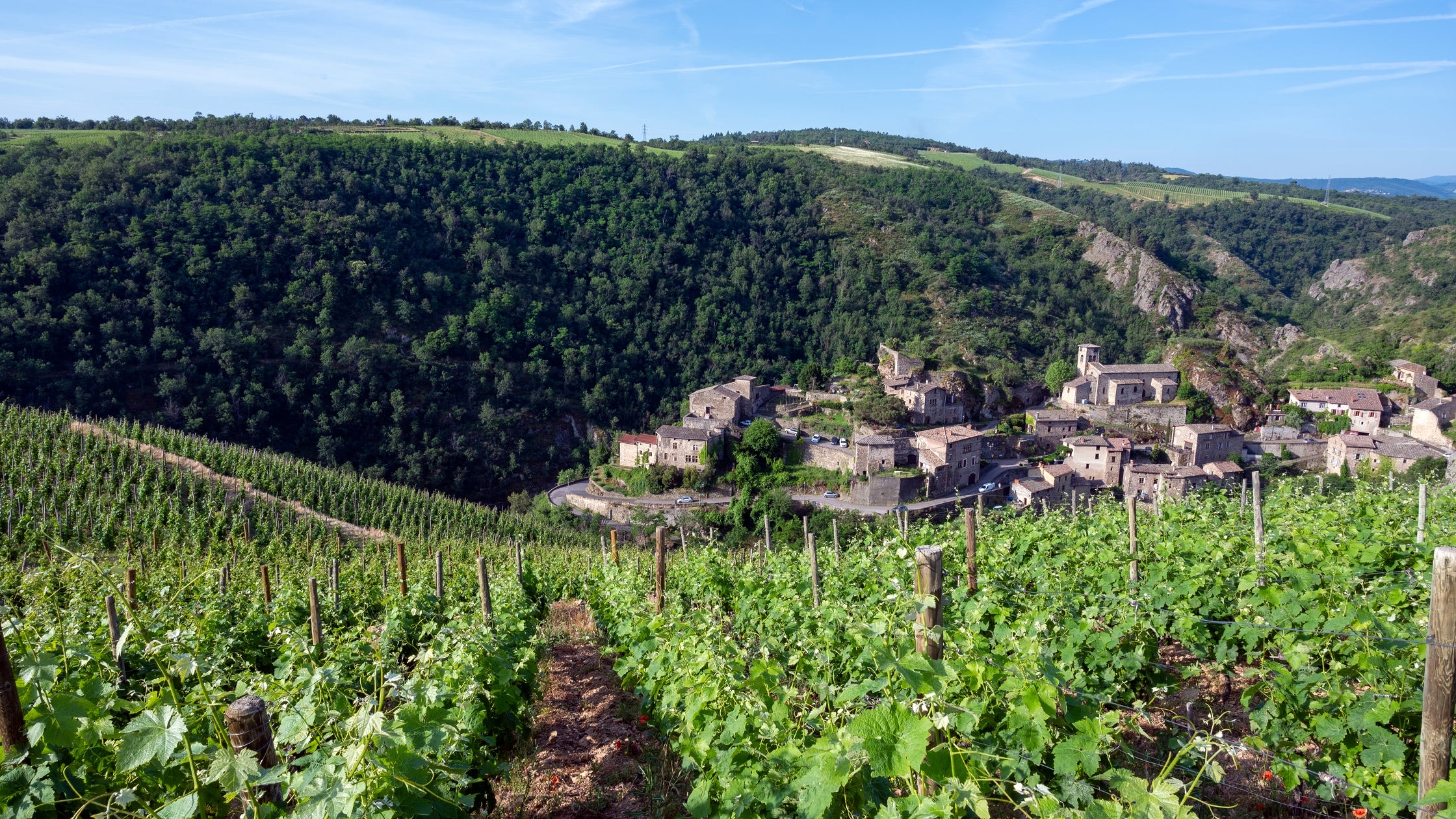
Forests of oak trees, terraced vineyards with steep pathways on friable granite soils, pebbly and sunny plains where vines mingle with olive trees, set the backdrop to the course of the Rhône, whose banks are dotted with precious vineyards, already known to the Greeks and Romans.

The Rhône Valley is located in southeastern France, from the city of Lyon to the region of Provence. The area experienced a certain decline in the 20th century, but since the 1980s, it has rediscovered the production of quality wines. The production of the Rhône Valley mainly focuses on black grape varieties: Syrah and Grenache above all.

It was probably the Greeks who began vine cultivation along the Rhône after settling on the Mediterranean coasts and traveling upstream along the river. However, it was the Romans who, after the foundation of the city of Vienne between 120 and 100 BC, planted the first vineyards on the terraces of the Hermitage hill and began the production of "vinum picatum" (described by the Roman historian Pliny the Elder), a wine made from a grape called Allobrogica and vinified in wooden barrels.

Today, the Rhône Valley is one of the most important French wine regions and over the years has carved out its space in the global wine scene.

The Rhône Valley is divided into two major areas: Northern Rhône and Southern Rhône. The Northern Rhône Valley includes these main appellations: Côte-Rôtie, Condrieu and Château-Grillet, Hermitage, Crozes-Hermitage, Saint-Joseph, Cornas, and Saint-Pèray. The Southern Rhône Valley includes these main appellations: Châteauneuf-du-Pape, Gigondas, Vacqueyras, Tavel, and Lirac, Muscat de Baumes-de-Venise, and Rasteau.

Drôme

The territory connects the north and south of the wine region in France.

The department of Drôme, located in the southeast of France with its capital Valence, is part of the Auvergne-Rhône-Alpes region and takes its name from the eponymous tributary of the Rhône. The vineyards of Drôme cover about 20,000 hectares of granitic and limestone soils, benefiting from a temperate and continental climate. Its wine-producing areas belong to the Rhône wine region.

The AOC (Appellation d'Origine Contrôlée) areas of the department include:

- Brézème-Côtes du Rhône
- Châtillon-en-Diois
- Clairette de Die
- Coteaux de Die
- Côtes du Rhône
- Côtes du Rhône-Villages
- Crémant de Die
- Crozes-Hermitage
- Hermitage
- Puyméras
- Rochegude
- Rousset-les-Vignes
- Sainte-Cécile-les-Vignes
- Saint-Maurice-sur-Eygues
- Saint-Pantaléon-les-Vignes
- Suze-la-Rousse
- Vinsobres

The IGP (Indication Géographique Protégée) wine region covering the entire department is called Drôme. This designation can be supplemented by more specific ones such as Comté de Grignan and Coteaux de Montélimar, previously separate VdP (Vin de Pays) areas. Other full-fledged IGP areas include Collines Rhôdaniennes and Coteaux des Baronnies. Drôme also belongs to the larger regional IGP areas of Comtés Rhodaniens and Méditerranée.

Red and rosé wines, representing 80% of production, are mainly blended from varieties such as Grenache Noir (Garnacha Tinta), Syrah, Gamay, Pinot Noir, Mondeuse Noire, and Merlot. White wines are produced with varieties such as Viognier, Chardonnay, Marsanne, Roussanne, Altesse, Clairette, and Viognier.

Connecting the North and South of France through Wine

Recommended pairings and dishes

Matching by concordance

By analogy, Clairette de Die pairs perfectly with fruit-based desserts, soft pastries, mousses, and other equally light and aromatic preparations.

Matching by contrast

The wine’s sweetness and natural acidity pair excellently with savory dishes. The contrast also works well with mildly intense blue cheeses, shellfish, or salty dishes that benefit from a soft, aromatic component to provide balance.

It pairs well with

Seafood, fish tartare, light dishes such as an asparagus or shrimp salad, fruit salads; cheeses.

Matching by concordance

By analogy, Clairette de Die pairs perfectly with fruit-based desserts, soft pastries, mousses, and other equally light and aromatic preparations.

Matching by contrast

The wine’s sweetness and natural acidity pair excellently with savory dishes. The contrast also works well with mildly intense blue cheeses, shellfish, or salty dishes that benefit from a soft, aromatic component to provide balance.

It pairs well with

Seafood, fish tartare, light dishes such as an asparagus or shrimp salad, fruit salads; cheeses.

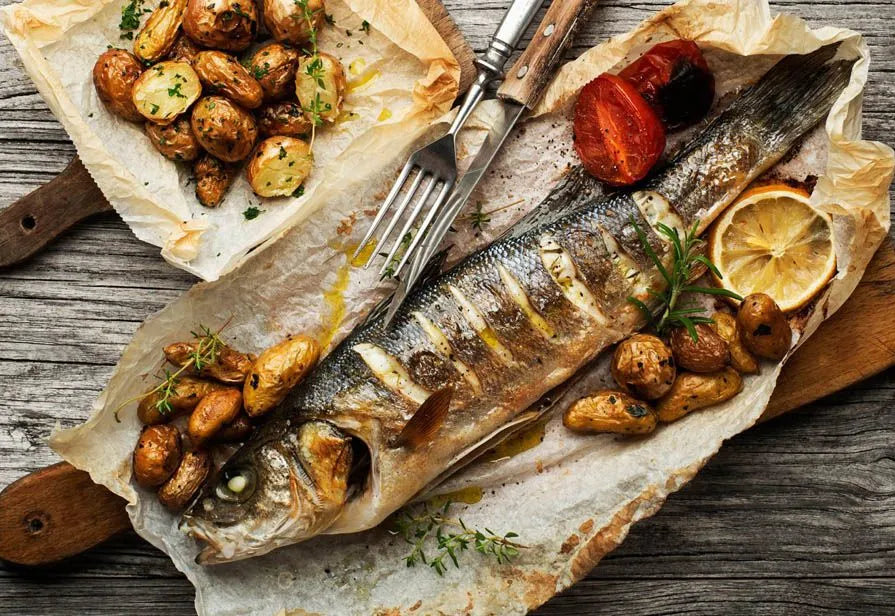
Baked Trout

Baked trout is a simple and tasty main course that can be enriched with cherry tomatoes, olives, capers, aromatic herbs, and served with seasonal vegetables that enhance the delicate flavor and lovely aromas of the fish.

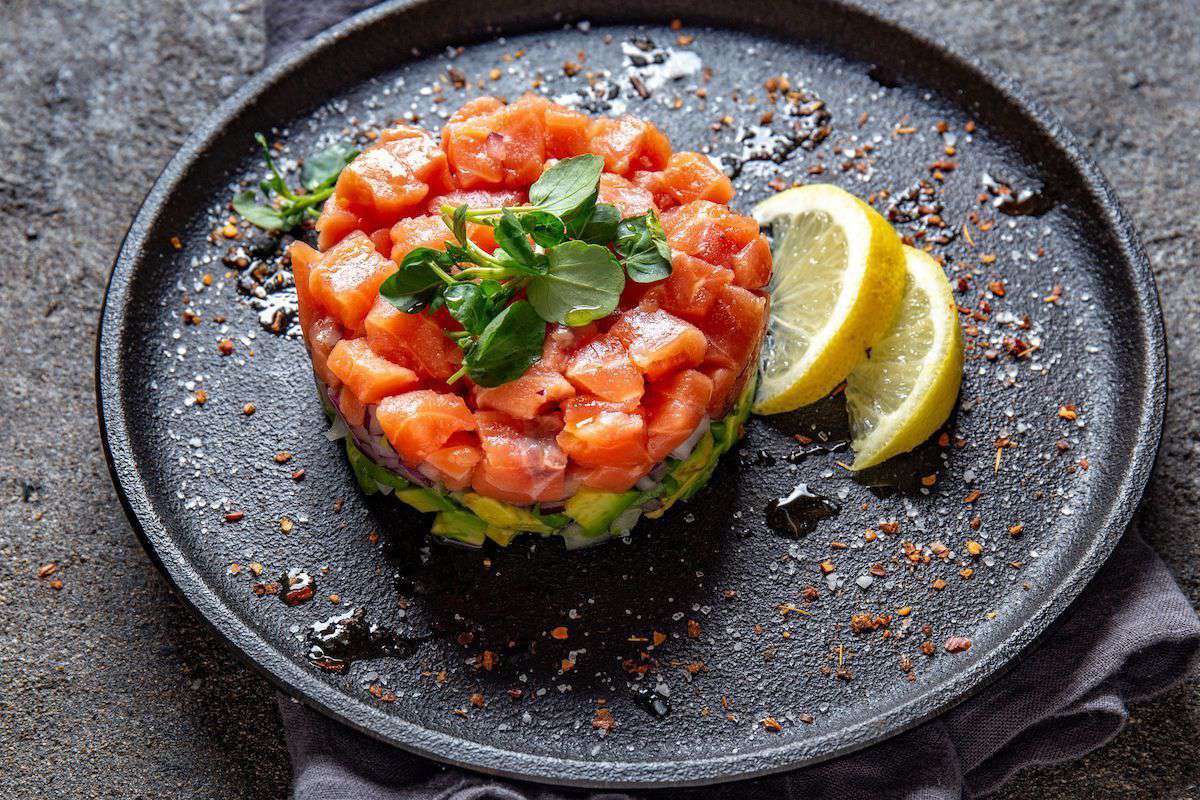
Salmon Tartare

A starter of raw fish with a unique refinement, rich in flavor and aromas yet very delicate and soft. It can be enhanced with avocado, toasted almonds, oil, lemon juice, or even chives.

Clairette de Die Tradition | Domaine Achard , did you like it?

Tell us about it by clicking here

Clairette de Die Tradition | Domaine Achard , did you like it?

Tell us about it by clicking here